Why Every Business Needs a CRM in 2025: Benefits, Features & Complete Guide
Why Every Business Needs a CRM in 2025: Benefits, Features & Complete Guide
The business landscape is evolving faster than ever. With rising customer expectations, increasing competition, and global digital transformation, companies need smarter systems to manage customer relationships effectively. This is where CRM (Customer Relationship Management) becomes essential.
In 2025, CRM is no longer just a tool—it's the backbone of every growing business. A modern CRM helps manage leads, automate workflows, improve sales performance, deliver personalized marketing, and enhance customer retention.
Whether you're a startup, small business, or enterprise, this article explains why every business needs a CRM in 2025 and how it transforms operations across sales, marketing, and customer support.
1. CRM Helps You Centralize All Customer Data
Businesses collect customer data from multiple platforms—social media, email, website forms, WhatsApp, phone calls, and offline interactions. Without a CRM, this information gets scattered and unorganized, causing delays and missed opportunities.
CRM solves this by storing all customer data in a centralized location.
A centralized CRM stores:
- Customer contact details
- Behavioral data
- Communication history
- Purchase history
- Current issues or complaints
- Lead source & journey
This 360-degree customer view helps employees make better and faster decisions.
2. CRM Boosts Sales Performance With Automation
Sales teams often waste time on repetitive tasks like updating spreadsheets, sending reminders, moving deals, and following up manually. CRM automation eliminates these tasks.
Sales automation includes:
- Automated follow-ups
- Pipeline progression
- Lead scoring
- Task reminders
- Meeting scheduling
- Proposal & quote creation
With automation, sales reps focus more on closing deals rather than performing manual administrative work.
3. CRM Improves Lead Conversion Rates
Without CRM, many leads go missing due to lack of tracking, slow responses, or poor follow-ups. In 2025, customers expect instant communication—if you don’t respond, your competitor will.
CRM improves conversions by:
- Capturing leads automatically from all channels
- Assigning leads to the right agents
- Sending automated follow-up messages
- Scoring leads based on behavior
- Tracking engagement
Businesses using CRM experience up to 40–60% higher lead conversion.
4. CRM Enhances Customer Support Quality
Customer support determines customer satisfaction and retention. A CRM with ticketing and helpdesk features ensures every customer gets timely and effective support.
CRM support features include:
- Ticket creation & tracking
- Support automation
- Chatbots
- Multi-channel support (email, chat, phone, WhatsApp)
- Escalation rules
- Customer context during support sessions
Because CRM stores full customer history, support agents deliver more personalized and accurate responses.
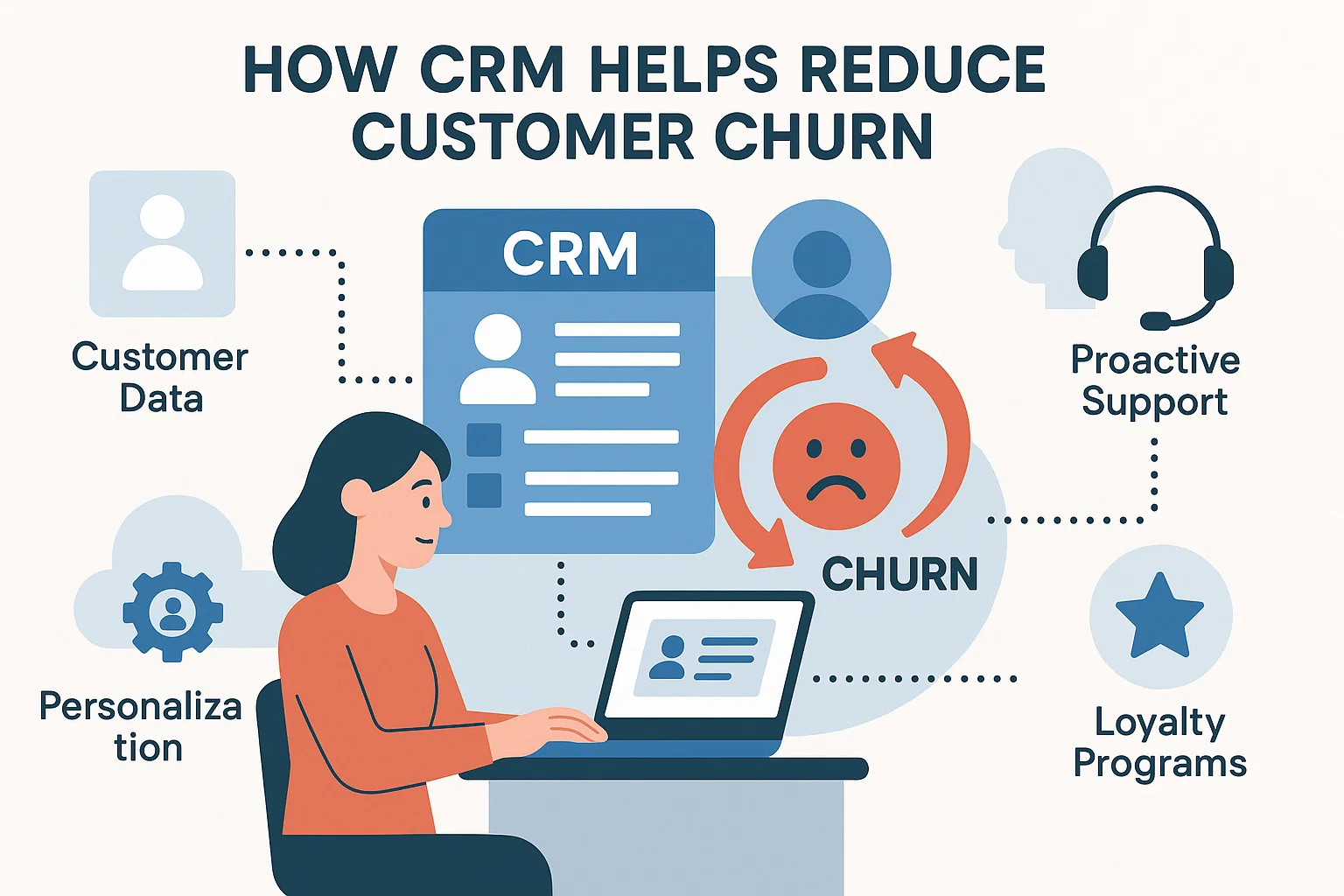
5. CRM Improves Customer Retention & Reduces Churn
Retaining customers is more profitable than acquiring new ones. CRM helps businesses monitor customer activity and identify early signs of churn.
CRM retention tools include:
- Renewal reminders
- Onboarding sequences
- Re-engagement campaigns
- VIP customer tracking
- Loyalty programs
- Review and feedback automation
With CRM-driven retention strategies, businesses can increase customer lifetime value (CLV) by up to 50%.
6. CRM Helps Businesses Make Data-Driven Decisions
Gut feelings no longer work in 2025. Data-driven decision-making is essential for growth. CRM provides advanced analytics and AI insights to help businesses understand customer behavior, revenue trends, and team performance.
CRM analytics include:
- Sales forecasts
- Lead source performance
- Conversion reports
- Agent performance
- Customer satisfaction metrics
- Support resolution data
These insights help prioritize actions and strategies that generate maximum ROI.
7. CRM Strengthens Marketing & Improves ROI
Marketing becomes significantly more effective when paired with CRM. Instead of mass marketing, businesses can target the right audience with personalized messages.
CRM supports:
- Email marketing automation
- SMS/WhatsApp campaigns
- Behavior-based segmentation
- Personalized communication
- Campaign performance tracking
This results in higher open rates, click-through rates, and conversions.
8. CRM Helps Build Personalized Customer Experiences
Customers expect brands to treat them as individuals. CRM tracks customer behavior, allowing businesses to send personalized messages at the right time.
Examples of personalization:
- Product recommendations
- Location-based offers
- Birthday and anniversary messages
- Purchase-based suggestions
- Custom onboarding flows
In 2025, personalization is not optional; it's required for competitive success.
9. CRM Streamlines Team Collaboration
When businesses grow, departments often work in silos. CRM ensures all teams—sales, marketing, support—work together using the same information.
CRM improves collaboration by:
- Sharing customer notes
- Real-time updates
- Tagging team members
- Assigning tasks
- Tracking team activity
This leads to faster problem-solving and better customer experiences.
10. CRM Provides Scalability for Growing Businesses
Every business wants to grow, but growth leads to more data, more leads, more customers, and more complexity. CRM makes scaling easier by automating manual work and organizing everything in one place.
CRM scales in areas like:
- Sales pipelines
- Marketing automation
- Support workflows
- Customer segmentation
- Multi-team coordination
The bigger the business grows, the more essential CRM becomes.
11. CRM Reduces Human Error
Manual data entry leads to mistakes that cost businesses opportunities. CRM minimizes errors using:
- Automated data entry
- Duplicate detection
- Automated reminders
- AI validation tools
With fewer errors, businesses operate more efficiently and professionally.
12. CRM Helps You Understand Customer Behavior in Real-Time
With real-time tracking, CRM shows exactly how customers interact with your business.
You can track:
- Website visits
- Email opens & clicks
- Product preferences
- App engagement
- Purchase patterns
This helps improve communication, offers, and customer journeys instantly.
Top CRM Tools to Consider in 2025
The CRM market is huge, but a few tools stand out in 2025:
- HubSpot CRM
- Zoho CRM
- Freshsales
- Salesforce
- Pipedrive
- Keap
- Monday CRM
- Close CRM
Each tool has unique strengths depending on business size and requirements.
Final Thoughts: CRM Is Mandatory for Every Business in 2025
CRM is no longer a luxury—it’s a necessity. Whether you run a small business or a large enterprise, CRM helps improve productivity, increase revenue, enhance customer experience, and build long-term relationships.
From automation to analytics to personalization, CRM empowers businesses to grow efficiently and stay ahead of competitors. If you want success in 2025 and beyond, adopting a CRM is one of the smartest decisions you can make today.
Comments (3)