Why CRM Analytics Matter: The Complete Guide for Small Businesses in 2025
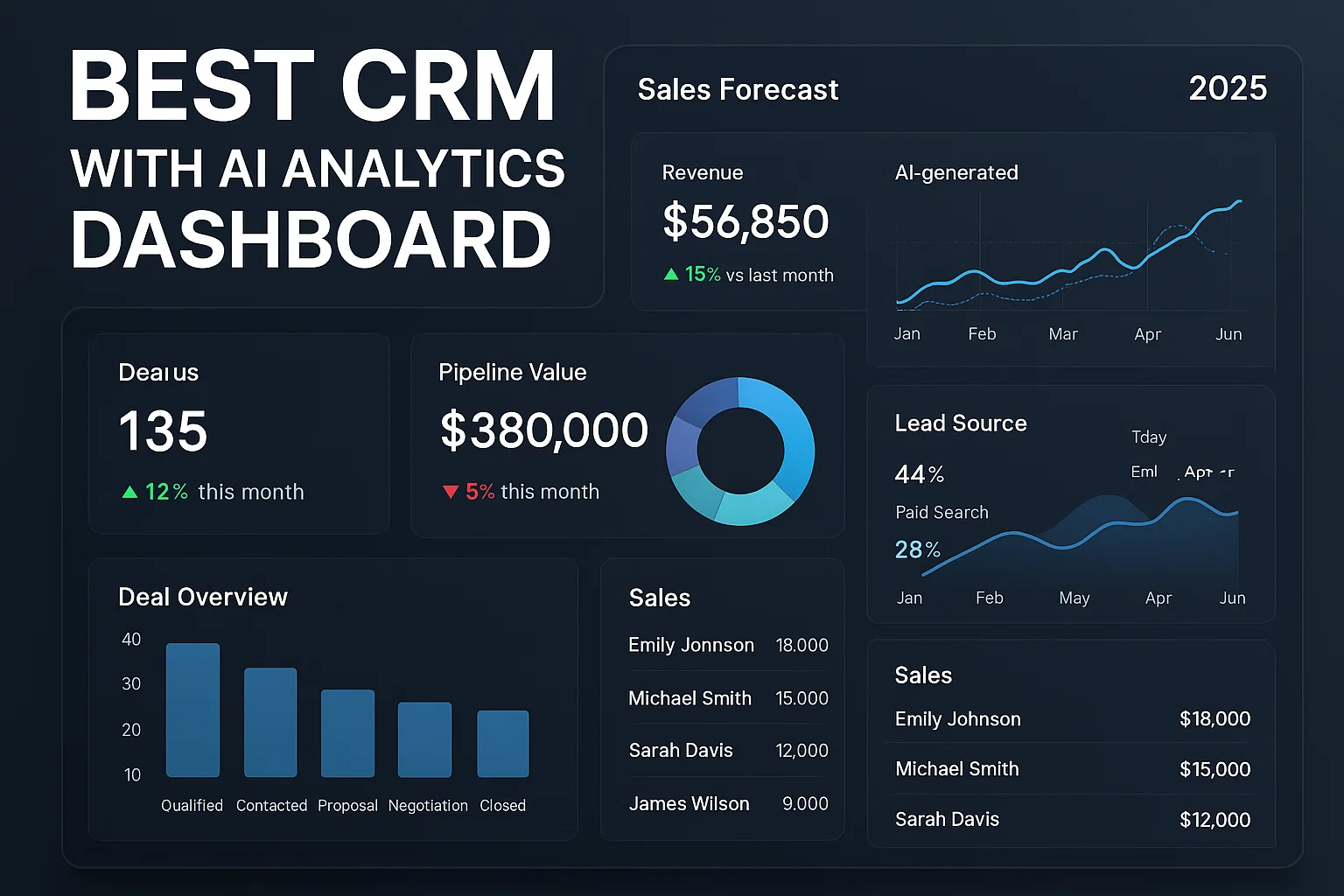
Why CRM Analytics Matter: The Complete Guide for Small Businesses in 2025
Small businesses today generate more data than ever before — customer interactions, sales activity, website behavior, support conversations, purchase history, email engagement, and much more. But having data means nothing unless you understand it. That’s where CRM analytics come in.
In 2025, CRM analytics have become one of the most powerful tools for small businesses because they reveal insights that help you improve marketing, boost sales, retain customers, and maximize revenue. Whether you run a retail shop, online store, real estate agency, medical clinic, SaaS startup, or consulting business — CRM analytics can transform the way you make decisions.
This complete guide covers everything you need to know about CRM analytics, how they work, the metrics you must track, the dashboards you need, and the top CRM tools that offer powerful analytics in 2025.
What Are CRM Analytics?
CRM analytics are tools and reports inside your CRM system that help you understand customer behavior, sales performance, marketing results, and business trends. These analytics convert raw data into meaningful insights, making it easier to make smart decisions.
Instead of guessing:
- Which leads will convert
- Which customers will leave
- Which campaigns are profitable
- Which salesperson performs best
- Which products are most popular
- Which channels bring high-quality users
Your CRM analytics provide clear answers using real-time data.
Why CRM Analytics Matter More Than Ever in 2025
Modern small businesses run in a highly competitive environment. Customers expect fast responses, personalized experiences, and consistent communication. CRM analytics help you keep up by revealing what works — and what doesn’t.
1. Make Decisions Faster
Instead of waiting weeks to measure results, CRM dashboards update in real time. This helps you adjust your strategies instantly.
2. Understand Customer Behavior
CRM analytics show you patterns in customer actions, such as:
- Buying frequency
- Preferred communication channels
- Support history
- Engagement with emails or offers
3. Increase Sales Performance
By understanding which leads convert, which products sell best, and which sales activities generate revenue, your team can improve efficiency.
4. Improve Customer Retention
CRM analytics identify at-risk customers, inactivity patterns, or negative interactions — helping you act before losing a customer.
5. Optimize Marketing Spend
Stop wasting money on campaigns that don’t work. Analytics show which channels bring high-value customers at the lowest cost.
The 12 Most Important CRM Metrics You Must Track
Here are the essential CRM analytics every small business must monitor to grow in 2025.
1. Customer Acquisition Cost (CAC)
How much you spend to acquire each new customer.
2. Customer Lifetime Value (CLV)
The total value a customer brings throughout their relationship with your business.
3. Lead Conversion Rate
Percentage of leads that become paying customers.
4. Sales Cycle Length
How long it takes to close a deal, from first contact to final sale.
5. Average Revenue Per User (ARPU)
Helps track how much each customer contributes financially.
6. Email Engagement Rate
Open rates, click rates, and replies help measure campaign effectiveness.
7. Customer Churn Rate
Percentage of customers who stop buying or engaging.
8. Net Promoter Score (NPS)
Measures customer satisfaction and loyalty.
9. Pipeline Value
Total worth of all deals currently in your sales pipeline.
10. Sales Win Rate
Percentage of completed deals compared to opportunities.
11. Support Ticket Resolution Time
Shows how quickly your support team solves customer issues.
12. Returning Customer Rate
Measures long-term loyalty and repeat purchase behavior.
Types of CRM Analytics Every Business Needs
CRM analytics are usually divided into three categories. Understanding them helps you use data the right way.
1. Descriptive Analytics
These show what happened in the past.
- Sales reports
- Email performance
- Customer activity logs
- Marketing campaign results
2. Predictive Analytics
Powered by AI, these predict the future.
- Lead scoring
- Churn prediction
- Revenue forecasting
- Customer behavior prediction
3. Prescriptive Analytics
These recommend actions.
- When to follow up
- Which leads are worth pursuing
- Which customers need attention
- Which campaign to stop or scale
Real Example: How CRM Analytics Helped a Small Business Increase Sales by 42%
A small eCommerce brand selling beauty products used CRM analytics to identify:
- Which products customers often purchased together
- Which emails performed poorly
- Which age group bought more high-value products
- Which social media campaigns produced the best leads
Based on the insights:
- They created bundles for frequently bought-together items
- Stopped low-performing campaigns
- Optimized high-converting demographics
- Improved email content using A/B testing
Result: A 42% increase in monthly sales and a
Must-Have CRM Dashboards for Small Businesses
A good CRM analytics system includes dashboards that give a complete overview of your operations. Here are the dashboards you need:
1. Sales Performance Dashboard
- Revenue
- Deals won/lost
- Sales cycle
- Top-performing products
- Salesperson performance
2. Customer Insights Dashboard
- LTV (Lifetime Value)
- Engagement score
- Churn probability
- Customer segments
3. Marketing Dashboard
- Campaign ROI
- Lead sources
- Email performance
- Acquisition cost
4. Support Dashboard
- Ticket status
- Response time
- Resolution rate
- Customer satisfaction
5. Business Growth Dashboard
- Monthly revenue trends
- Forecasted revenue
- Customer growth
- Top channels
Top CRM Tools with Powerful Analytics in 2025
Here are the best CRM platforms that offer strong reporting and analytics for small businesses.
1. HubSpot CRM
Free and powerful analytics dashboard with detailed sales and marketing metrics.
2. Zoho CRM
Affordable CRM with advanced AI-driven analytics and forecasting.
3. Salesforce Essentials
Industry-leading analytics for small teams needing enterprise-level insights.
4. Pipedrive
Highly visual and easy-to-understand pipeline analytics.
5. Freshsales
AI-based lead scoring, sales forecasting, and customer insights.
How to Start Using CRM Analytics: Step-by-Step
Step 1: Set Your Goals
Examples:
- Increase sales by 20%
- Reduce churn by 10%
- Improve lead response time
Step 2: Identify Key Metrics
Choose the most relevant metrics for your business type.
Step 3: Build Your Dashboards
Set up real-time dashboards for sales, customers, and marketing.
Step 4: Automate Reports
Daily/weekly/monthly reports should be automatically delivered to email or WhatsApp.
Step 5: Analyze & Optimize
Review performance and make improvements regularly.
Final Thoughts: CRM Analytics Are the Future
In 2025 and beyond, small businesses that use CRM analytics will grow faster, make smarter decisions, and deliver better customer experiences than competitors who rely on guesswork.
Whether you're trying to improve sales, reduce churn, optimize marketing, or understand customer behavior — CRM analytics give you everything you need to grow confidently.
Start using CRM analytics today, and unlock a smarter, more profitable future for your business.
Comments (3)